

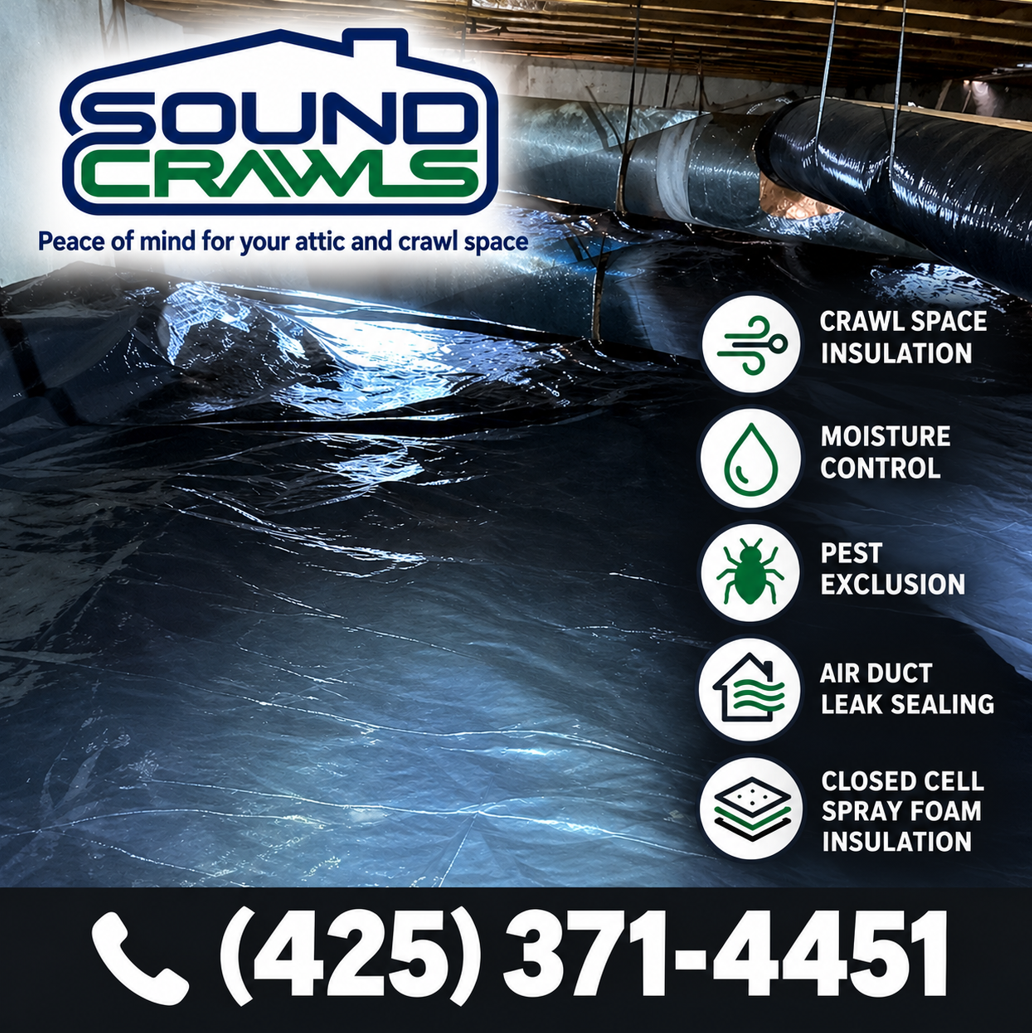
A persistent musty smell inside your SeaTac home is more than an unpleasant nuisance. It can be an early warning that moisture is collecting somewhere you cannot easily see. Crawl spaces are particularly important to investigate because damp soil, plumbing leaks, poor drainage, damaged insulation, mold growth, and contaminated materials can all create odors beneath the living space. Finding the source matters because air and moisture do not necessarily remain confined below the floor. When the odor keeps returning after cleaning and airing out the house, the problem may be deeper than the room where you notice it.
Why Musty Odors Develop
That familiar earthy, stale odor is commonly associated with damp materials and microbial growth. Moisture may collect in wood, insulation, soil, or other materials long before homeowners notice obvious water inside their living areas.
In a crawl space, moisture can come from several directions. Ground moisture can rise from exposed soil. Rainwater can migrate toward the foundation. Plumbing leaks can introduce water from above. Humid outside air can also affect conditions beneath the house.
Finding crawl space moisture problems early can help prevent a manageable moisture issue from becoming a larger restoration project.
The odor itself does not identify the exact cause. It tells you that an investigation is warranted.
Why Can I Smell My Crawl Space Upstairs?
Crawl spaces are separated from living areas, but they are not necessarily isolated from them.
Small openings exist around plumbing lines, electrical penetrations, ductwork, framing, and other building components. Differences in air pressure can allow air from beneath the home to migrate upward through these pathways.
If the crawl space contains damp insulation, mold growth, pest contamination, or stagnant moisture, odors can travel with that air.
This explains why homeowners sometimes smell something musty without finding visible mold or water inside the room. The noticeable odor may be upstairs while its source is beneath the floor.
Exposed Soil Can Be a Major Moisture Source
A crawl space with exposed or inadequately covered soil can continuously receive moisture from the ground. You do not need standing water for this to become a problem.
Water vapor can move from the soil into the crawl-space environment, raising humidity and creating conditions that affect wood and insulation. Over time, the space may develop the damp, earthy odor homeowners associate with basements and neglected crawl spaces.
A properly installed crawl space vapor barrier helps control ground moisture by separating the crawl space from the soil below.
If an existing barrier is torn, displaced, incomplete, or deteriorated, sections of exposed ground may continue releasing moisture. An inspection can determine whether the barrier is still doing its job or needs attention.
Mold May Be Part of the Problem
A musty odor is often associated with mold, but smell alone cannot tell you how extensive a mold problem is or exactly where it is located.
Crawl spaces can provide favorable conditions for growth when moisture remains elevated. Wooden framing, dust, debris, and other organic materials can provide surfaces where mold develops.
SeaTac’s long periods of wet weather make moisture management particularly important. A small water-intrusion issue that persists can keep materials damp for extended periods.
Visible discoloration, fuzzy growth, or staining should be evaluated, but homeowners should not assume the absence of visible mold means the crawl space is dry. Problem areas may be behind insulation, along framing, or deeper inside the space.
Addressing crawl space mold remediation requires considering why moisture was present in the first place. Cleaning affected surfaces without correcting the moisture source creates an opportunity for the same conditions to return.
Wet Insulation Can Hold Odors

Insulation is another potential source of persistent smells.
Fiberglass that becomes damp, contaminated by rodents, or exposed to prolonged humidity may deteriorate. Sagging or damaged insulation can also create pockets where moisture and debris accumulate.
In these situations, simply drying the crawl space may not be enough. Contaminated materials can continue producing odors even after the original moisture source has been corrected.
Professional evaluation can determine whether insulation remains serviceable or whether crawl space insulation removal should be part of restoring the area.
Replacement should come after the conditions responsible for the damage are understood. Installing fresh insulation into an unresolved moisture or pest problem risks repeating the same cycle.
Moisture vs Mold vs Pest Contamination
These problems can produce similar odors, but they require different responses.
Excess moisture may create a damp, earthy smell even before significant material damage occurs.
Mold growth can develop when susceptible materials remain damp and may produce persistent musty odors.
Pest contamination can introduce urine, droppings, nesting materials, and damaged insulation, creating odors that may be mistaken for moisture problems.
More than one issue can also exist at the same time. Rodents may damage a vapor barrier, insulation may become contaminated, and elevated moisture may further degrade the space.
That overlap is why determining the source is more valuable than guessing based on smell alone.
Frequently Asked Questions
Does a musty smell always mean there is mold?
No. A musty odor can be associated with mold, but damp soil, wet insulation, excess humidity, pest contamination, and other moisture-related conditions can produce similar smells. An inspection can help identify the actual source.
Can crawl-space odors get into my house?
Yes. Air can move from a crawl space into living areas through openings around plumbing, wiring, ductwork, framing, and other penetrations. Odors from damp or contaminated materials beneath the home may therefore become noticeable upstairs.
Can wet crawl-space insulation cause a musty odor?
Wet or contaminated insulation can contribute to persistent odors and may lose its effectiveness. Depending on its condition, damaged insulation may need to be removed after the underlying moisture or contamination problem is addressed.
Why does my house smell mustier when it rains?
A stronger odor during wet weather can indicate that exterior water, ground moisture, drainage conditions, or elevated humidity are affecting the crawl space. The source should be identified before moisture causes additional damage.
When should I have a musty crawl space inspected?
Schedule an inspection when the odor persists or returns frequently, especially when accompanied by visible mold, high humidity, standing water, damaged insulation, pest activity, or a deteriorated vapor barrier.
Why Air Fresheners and Dehumidifiers May Not Solve It
Air fresheners can cover an odor temporarily, but they do not remove damp materials or stop water from entering a crawl space.
A dehumidifier may help manage humidity in an appropriately designed system, but equipment alone cannot repair a plumbing leak, redirect exterior water, replace a failed vapor barrier, or remove contaminated insulation.
The better question is not, “How do I make this smell better?” It is, “What is producing this smell?”
Once the source is identified, the solution can be matched to the actual problem.
When a Musty Smell Calls for an Inspection
An odor that appears briefly after an isolated event may not indicate a major crawl-space problem. A smell that persists, becomes stronger during wet weather, or repeatedly returns deserves more attention.
Other warning signs increase the urgency. These include cold or damp floors, high indoor humidity, condensation, visible mold, sagging insulation, standing water, rodent evidence, or a damaged vapor barrier.
SeaTac homeowners should also pay attention when odors are strongest near floor registers, closets, utility penetrations, or rooms located above a crawl space.
Early inspection can help limit repair costs. Moisture that initially affects a small section of insulation or vapor barrier can eventually contribute to broader contamination and material deterioration if its source remains active.
Solve the Source, Not Just the Smell
At Sound Crawls, we look beyond the odor to determine what conditions are creating it. Depending on what we find, restoring a crawl space may involve moisture control, drainage improvements, vapor-barrier work, insulation removal or replacement, mold-related services, pest exclusion, or a combination of solutions.
The goal is not simply to make the crawl space smell better for a few days. It is to create healthier conditions beneath the home that support the living environment above it. Healthy homes start from the ground up, and persistent odors are often the home’s way of signaling that something below needs attention.
If a musty smell keeps returning in your SeaTac home, especially during wet weather or alongside humidity, mold, insulation damage, or pest concerns, it is time to investigate the source. Call Sound Crawls at (425) 371-4451 to schedule an inspection and find out what is happening beneath your home before hidden moisture causes more extensive damage.