

Choosing insulation for the hidden areas of a home is not simply a matter of picking the material with the highest number on a product label. For Stanwood homeowners, the decision often comes down to how well an insulation system handles moisture, air movement, temperature changes, and the conditions beneath the house. Spray foam insulation and traditional materials such as fiberglass can both provide thermal protection, but they perform differently over time. Understanding those differences can help homeowners choose an option that supports comfort, efficiency, and the long-term health of the home.
How Spray Foam Insulation Works
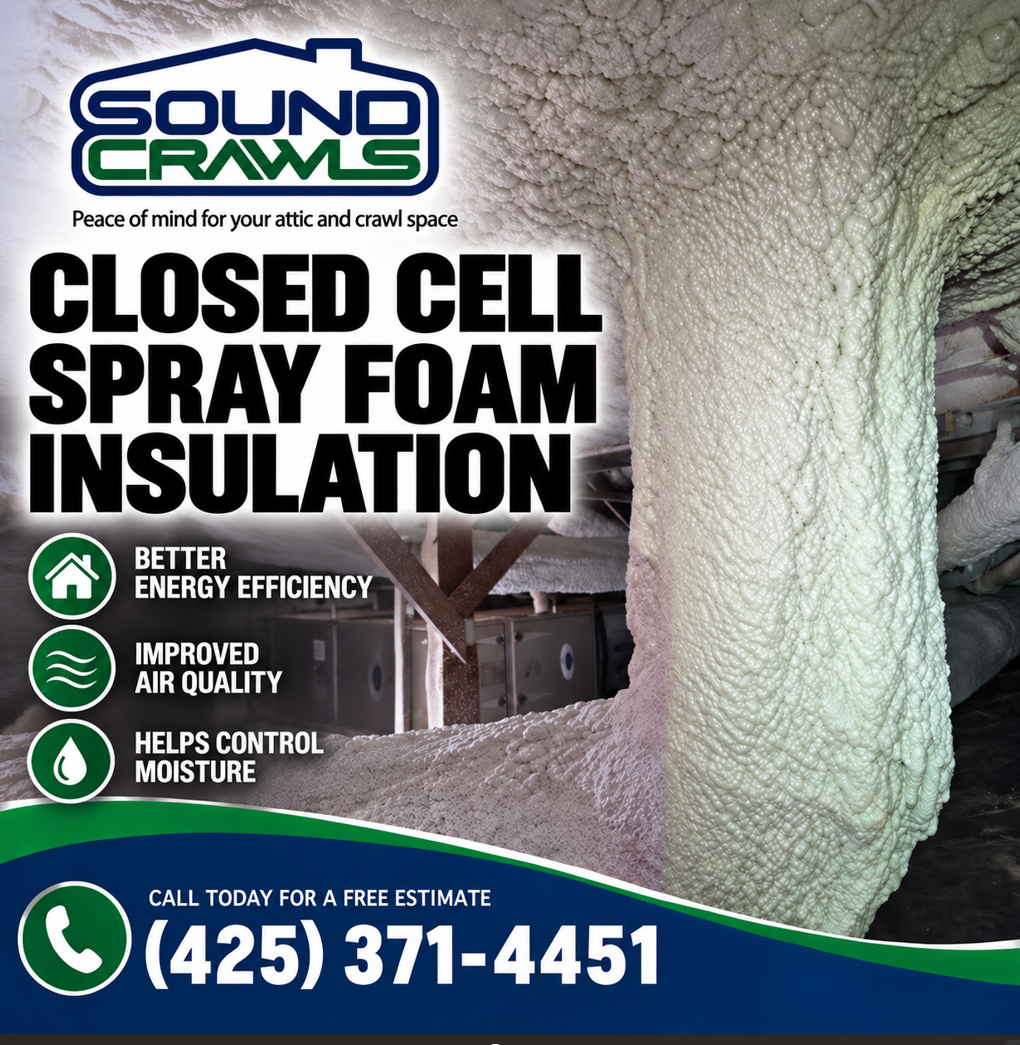
Closed-cell spray foam is applied as a liquid that expands and hardens against the surface where it is installed. The expansion allows the material to fill small gaps, seams, and irregular areas that can otherwise become pathways for unwanted airflow.
This ability to insulate and limit air movement is one of the biggest distinctions between spray foam and traditional insulation. Instead of relying solely on insulation fitted between framing members, closed-cell foam creates a more continuous layer.
For homes where drafts, cold floors, or inconsistent temperatures have become noticeable, evaluating closed cell spray foam insulation can reveal whether air leakage is contributing to the problem as much as insufficient insulation.
Closed-cell foam is also resistant to moisture absorption, which is particularly valuable in crawlspaces. Insulation beneath a home is exposed to conditions that are very different from those inside a finished wall. Damp soil, seasonal humidity, drainage problems, plumbing leaks, and outside air can all affect how well insulation continues to perform.
How Traditional Insulation Compares
Fiberglass remains a widely used insulation material because it is effective, familiar, and generally less expensive upfront than spray foam. Properly installed fiberglass can provide reliable thermal resistance, particularly when the surrounding area remains dry and the material stays securely positioned.
The challenge is that crawlspace conditions are not always ideal.
Fiberglass batts can become compressed, displaced, or damaged. Moisture can reduce their effectiveness, while animal activity can tear or contaminate insulation. Batts that begin sagging away from the subfloor also create gaps that allow heat to move more easily through the floor assembly.
Traditional insulation is not automatically the wrong choice. The condition of the crawlspace, project budget, moisture exposure, existing ventilation, and intended application all matter. Sound Crawls evaluates these factors rather than assuming one insulation material belongs in every home.
When existing material has already deteriorated, insulation removal and replacement may be necessary before an effective new insulation system can be installed.
Spray Foam vs Fiberglass: The Main Differences

The most useful comparison is not simply which material insulates. Both do. The question is how each material addresses the conditions affecting the space.
Air sealing: Fiberglass slows heat transfer but does not function as a complete air-sealing material. Spray foam expands into gaps and can provide both insulation and air-sealing benefits.
Moisture resistance: Closed-cell spray foam resists moisture absorption. Fiberglass can lose performance when exposed to persistent dampness and may sag or become contaminated.
R-value per inch: Closed-cell spray foam generally provides a higher R-value per inch than fiberglass, making it useful where installation depth is limited.
Installation cost: Traditional insulation typically has a lower initial material and installation cost. Spray foam generally requires a larger upfront investment because of the material, equipment, preparation, and specialized application involved.
Longevity: Performance depends on installation quality and surrounding conditions. Properly applied closed-cell foam remains attached to the substrate and does not sag like batt insulation can.
The better value therefore depends on more than the initial estimate. An inexpensive insulation installation that later becomes wet, damaged, or displaced can eventually require removal and replacement.
Moisture Problems Should Be Addressed First
New insulation should not be used to conceal an unhealthy crawlspace.
Before recommending insulation, we look for evidence of moisture intrusion, damaged vapor barriers, standing water, mold concerns, animal activity, deteriorated materials, and other conditions that could undermine the new installation.
Stanwood’s wet seasons make this evaluation especially important. If water is entering the crawlspace because of drainage conditions, installing insulation alone does not correct the source.
A damaged or incomplete vapor barrier replacement may also need attention because controlling moisture from exposed soil helps create better conditions for the entire crawlspace system.
This is where a whole-space approach provides greater long-term value. Insulation, drainage, ventilation, vapor barriers, and air sealing affect one another. Correcting only the most visible symptom can leave the underlying cause untouched.
What About Energy Efficiency?
Insulation reduces heat transfer between conditioned living areas and spaces that experience different temperatures. Air leakage can create an additional source of energy loss.
Closed-cell spray foam addresses both issues by providing thermal resistance while sealing many of the small openings where air can pass. That can be particularly helpful around rim joists and other areas with seams or penetrations.
Traditional insulation can still perform effectively when it is properly installed and paired with appropriate air-sealing measures. The important distinction is that fiberglass itself should not be expected to stop airflow.
Homeowners noticing cold floors, persistent drafts, uneven temperatures, or rising heating costs may benefit from having both insulation condition and air leakage evaluated instead of assuming more insulation alone will solve the problem.
Frequently Asked Questions
Is spray foam insulation better than fiberglass in a crawlspace?
It depends on the crawlspace conditions and the goals of the project. Closed-cell spray foam provides insulation, air sealing, and strong moisture resistance, while fiberglass can provide effective thermal protection when it remains dry and properly installed.
Does old insulation need to be removed before installing new insulation?
Removal may be necessary when existing insulation is wet, contaminated, damaged, compressed, or deteriorated. A crawlspace inspection can determine whether the existing material can remain or should be removed before new insulation is installed.
Why does crawlspace insulation start sagging?
Moisture, age, improper installation, and animal activity can contribute to sagging insulation. Once insulation pulls away from the subfloor, gaps can reduce its ability to provide consistent thermal protection.
Can spray foam help with cold floors?
Spray foam can help when heat loss and air leakage beneath the floor contribute to uncomfortable temperatures. Other crawlspace conditions may also affect cold floors, so an inspection can help identify the actual cause.
When Does Spray Foam Offer Better Long-Term Value?
Higher upfront cost does not necessarily mean higher lifetime cost.
Closed-cell spray foam may make sense when moisture resistance, limited installation depth, air sealing, and durability are priorities. A homeowner planning to remain in the property for years may place greater value on reducing recurring insulation problems than someone focused primarily on initial project cost.
Traditional insulation may remain an appropriate option when crawlspace conditions are controlled and the installation can be protected from moisture and pests.
The condition of the existing insulation is equally important. Wet, contaminated, compressed, or deteriorated material should be evaluated rather than simply covered. Knowing the signs crawlspace insulation is no longer working can help homeowners recognize when an insulation problem has progressed beyond ordinary aging.
The Installation Matters as Much as the Material
Even high-performance insulation cannot compensate for poor preparation.
Spray foam requires careful application to achieve appropriate, consistent coverage. Existing conditions must be evaluated, surfaces need to be suitable for installation, and areas around utilities and building components require proper attention.
Traditional insulation also depends on installation quality. Gaps, compression, incomplete coverage, and poorly secured batts can reduce performance.
That is why comparing two materials based only on their advertised R-values provides an incomplete picture. Homeowners should consider the condition of the crawlspace, moisture exposure, air leakage, installation quality, expected service life, and whether other improvements are required.
Choose Insulation as Part of a Healthier Crawlspace
At Sound Crawls, we believe healthy homes start from the ground up. Insulation is an important part of that philosophy, but it works best when the crawlspace surrounding it is also addressed.
For Stanwood homeowners, the right choice might be closed-cell spray foam, traditional insulation, or a broader crawlspace revitalization plan that includes moisture-control improvements. A thorough inspection provides the information needed to determine which approach fits the home rather than relying on a one-size-fits-all recommendation.
If your current insulation is wet, sagging, contaminated, leaving floors cold, or no longer providing dependable performance, it is time to have the crawlspace evaluated. For spray foam insulation in Stanwood and help comparing it with traditional options, contact Sound Crawls at (425) 371-4451 to schedule an inspection and discuss the right insulation solution for your home.