

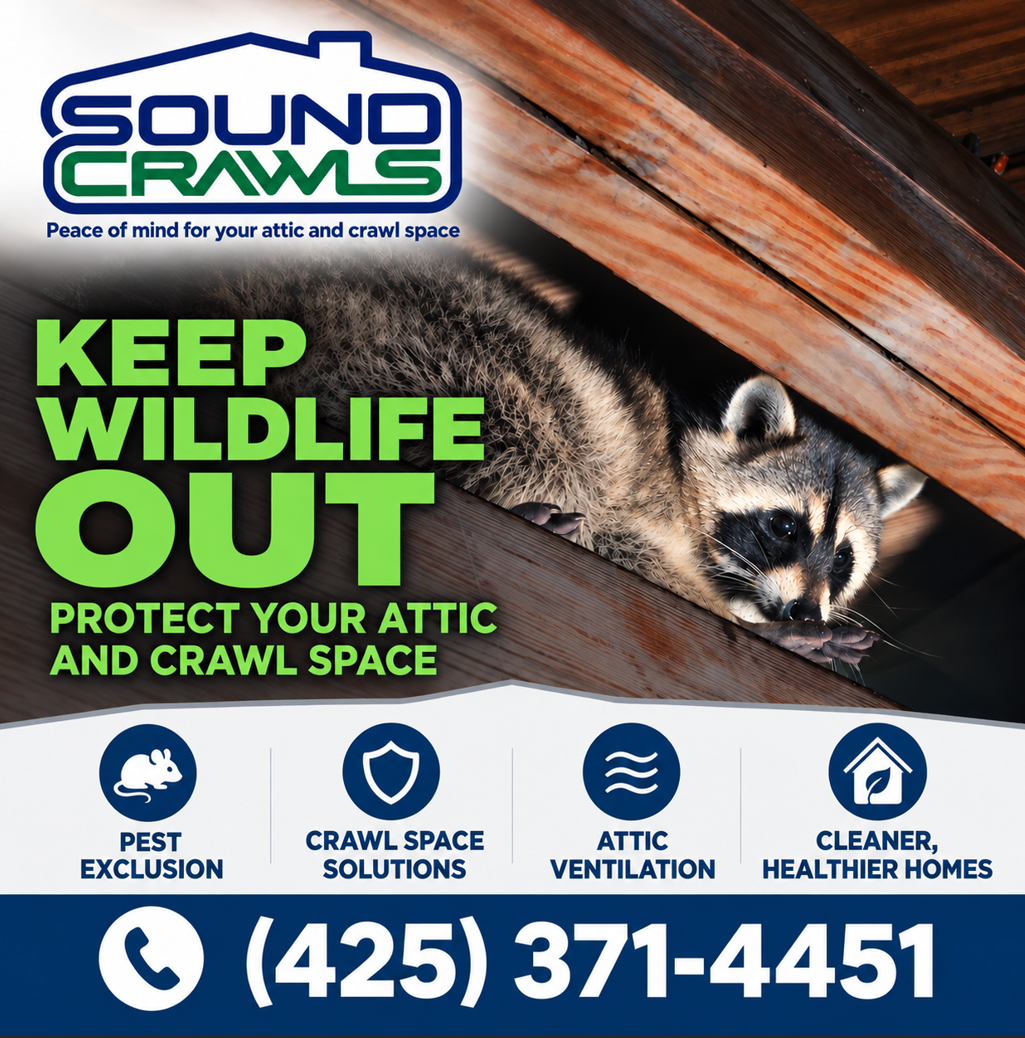
Hearing scratching above the ceiling or finding droppings beneath the house usually means an animal has already discovered a way inside. Effective pest exclusion starts by determining exactly how rodents and wildlife are entering, then closing those routes so the problem does not keep returning. In Redmond homes, crawl spaces and attics offer warmth, shelter, nesting material, and protection from wet weather. Unfortunately, an opening that looks insignificant to a homeowner may be more than enough for a determined animal.
Why Crawl Spaces and Attics Attract Animals
Animals are not necessarily interested in living inside the finished portion of a house. Attics and crawl spaces provide something better: relatively quiet areas where they can remain hidden.
Mice, rats, squirrels, raccoons, and other animals may seek shelter when temperatures drop or wet weather makes outdoor nesting areas less comfortable. Once inside, insulation provides nesting material, while plumbing lines, ductwork, framing, and other building components create protected travel routes.
An inspection for animal and pest exclusion focuses on both evidence of animal activity and the openings that allowed that activity to begin. Simply addressing the animals without correcting their access points leaves the home vulnerable to another infestation.
Foundation Vents Are Common Entry Points
Crawl-space vents are designed to serve a purpose, but damaged vent screens can become convenient entrances. Screens may deteriorate with age, pull away from their frames, or develop openings around the edges.
Rodents can also enlarge weak spots by chewing.
From outside the house, a damaged screen may still appear mostly intact. From an animal’s perspective, however, a small opening can provide direct access to the protected space beneath the home.
Vent repairs used for exclusion must prevent entry without creating new problems for the crawl space. Blocking openings indiscriminately can interfere with the way the home’s ventilation system was designed to function. This is one reason exclusion should be approached as part of the building system rather than as a matter of simply covering holes.
Gaps Around Pipes and Utility Penetrations

Every pipe, cable, conduit, or utility line entering a home requires a penetration through part of the structure. Small gaps can remain around these openings, or previously sealed areas can deteriorate over time.
Those spaces are easy to overlook because they may be behind landscaping, close to the ground, or tucked beneath siding.
Rodents are particularly good at exploiting irregular openings. Evidence around a penetration may include gnawing, greasy rub marks, droppings, disturbed insulation, or debris that has been pulled toward the opening.
A detailed crawl space inspection and repair can identify these vulnerable areas along with moisture, insulation, and structural concerns that may otherwise remain hidden beneath the home.
Crawl-Space Doors and Access Panels
An access door that does not close tightly can effectively become an animal entrance.
Wooden doors can warp or deteriorate. Hardware can loosen. Improvised covers may leave gaps along the bottom or sides. Even a door that appears closed from several feet away may have enough clearance for smaller rodents.
The condition of the surrounding framing matters as well. Replacing or securing the door does little good if an animal can move around it through deteriorated material.
Redmond homeowners who repeatedly find evidence of rodents should have the entire access area inspected rather than assuming the door itself is the only weak point.
Rooflines, Soffits, and Attic Openings
Attic infestations often begin much higher on the house.
Animals capable of climbing can reach roof edges, soffits, vents, fascia gaps, and other vulnerable areas. Tree branches, fences, utility lines, and architectural features may provide routes toward the roof.
Once an animal reaches the roofline, loose or damaged building materials can provide access to the attic. Small openings can also become larger after repeated animal activity.
Attic entry points can be especially difficult to identify from the ground. A complete attic inspection and repair allows problem areas and signs of contamination or insulation damage to be evaluated together.
Entry Points Can Lead to Larger Problems
The animal itself is only one part of an infestation.
Rodents can contaminate insulation with urine and droppings, compress or tear insulation for nesting, damage vapor barriers, and chew materials inside the space. Odors may eventually move into living areas, and damaged insulation can become less effective.
Chewed wiring creates another concern that should never be dismissed. Any suspected electrical damage should be evaluated by an appropriate qualified tradesperson.
Contaminated or badly damaged insulation may require insulation removal and replacement after the entry points and pest problem have been addressed. Installing new insulation before stopping re-entry risks putting fresh material directly into an environment animals can access again.
Frequently Asked Questions
How do rodents get into a crawl space?
Rodents can enter through damaged foundation vents, gaps around utility penetrations, poorly fitted crawl-space doors, deteriorated building materials, and other small exterior openings. A thorough inspection can identify access points that may be difficult to see from outside the home.
How do animals get into an attic?
Animals may reach attics through damaged soffits, roofline gaps, vents, fascia areas, and other openings near the roof. Climbing animals can use trees, fences, utility lines, and parts of the structure to reach vulnerable areas.
Is removing rodents enough to solve the problem?
Removal addresses the animals currently present, while exclusion addresses the openings that allowed them inside. Without sealing appropriate entry points, another animal may eventually use the same route.
Can rodents damage crawl-space or attic insulation?
Yes. Rodents can compress, tear, nest in, and contaminate insulation with urine and droppings. Heavily damaged or contaminated insulation may need to be removed and replaced after the pest problem and entry points are addressed.
When should I have my crawl space or attic inspected for pests?
Schedule an inspection when you hear scratching or movement, discover droppings or nesting material, notice unusual odors, find damaged vents or insulation, or see exterior gaps that could provide animal access.
Pest Removal and Pest Exclusion Are Different
Removing an animal addresses the immediate problem. Exclusion addresses how the problem happened.
That distinction matters because a crawl space or attic can become attractive to another animal after the original occupant is gone. If the same foundation opening, damaged vent, or roofline gap remains accessible, the cycle can start again.
A thorough exclusion strategy identifies likely access routes and uses appropriate materials to secure them. Depending on the location, that may involve rodent-resistant screening, durable patching materials, repairs around penetrations, or other methods suited to the structure.
The goal is not merely an empty crawl space today. It is reducing the likelihood that animals will regain access later.
Signs It Is Time to Schedule an Inspection
Scratching, scurrying, or movement inside walls, ceilings, crawl spaces, or attics deserves attention. So do droppings, unusual odors, shredded insulation, gnaw marks, damaged vent screens, nesting material, or unexplained changes to insulation.
Homeowners should also consider an inspection after discovering an obvious exterior opening, even when they have not yet seen an animal. Closing vulnerabilities before significant contamination occurs can help prevent a much larger restoration project.
Waiting can increase the scope and cost of the problem. A minor entry-point repair is very different from addressing widespread contaminated insulation, damaged vapor barriers, sanitation needs, and multiple structural access points after animals have occupied the space for months.
Protect the Whole Space, Not Just the Hole
Pest activity often reveals other conditions that deserve attention. Damp crawl spaces, damaged insulation, deteriorated barriers, and neglected access areas can all make the space less healthy and harder to protect.
At Sound Crawls, we look at the attic or crawl space as a complete system. Exclusion can be coordinated with cleanup, insulation restoration, vapor-barrier work, and other necessary improvements when the infestation has affected more than an entry point.
That broader approach supports our belief that healthy homes start from the ground up. Keeping animals out is part of maintaining a cleaner, safer, better-protected space beneath and above the living areas.
If you hear scratching, find droppings, notice damaged insulation, or suspect animals are entering your Redmond home, do not wait for the damage to spread. Sound Crawls provides pest exclusion to identify vulnerable entry points and help protect crawl spaces and attics against recurring animal activity. Call Sound Crawls at (425) 371-4451 to schedule an inspection and find out where unwanted visitors are getting inside.