

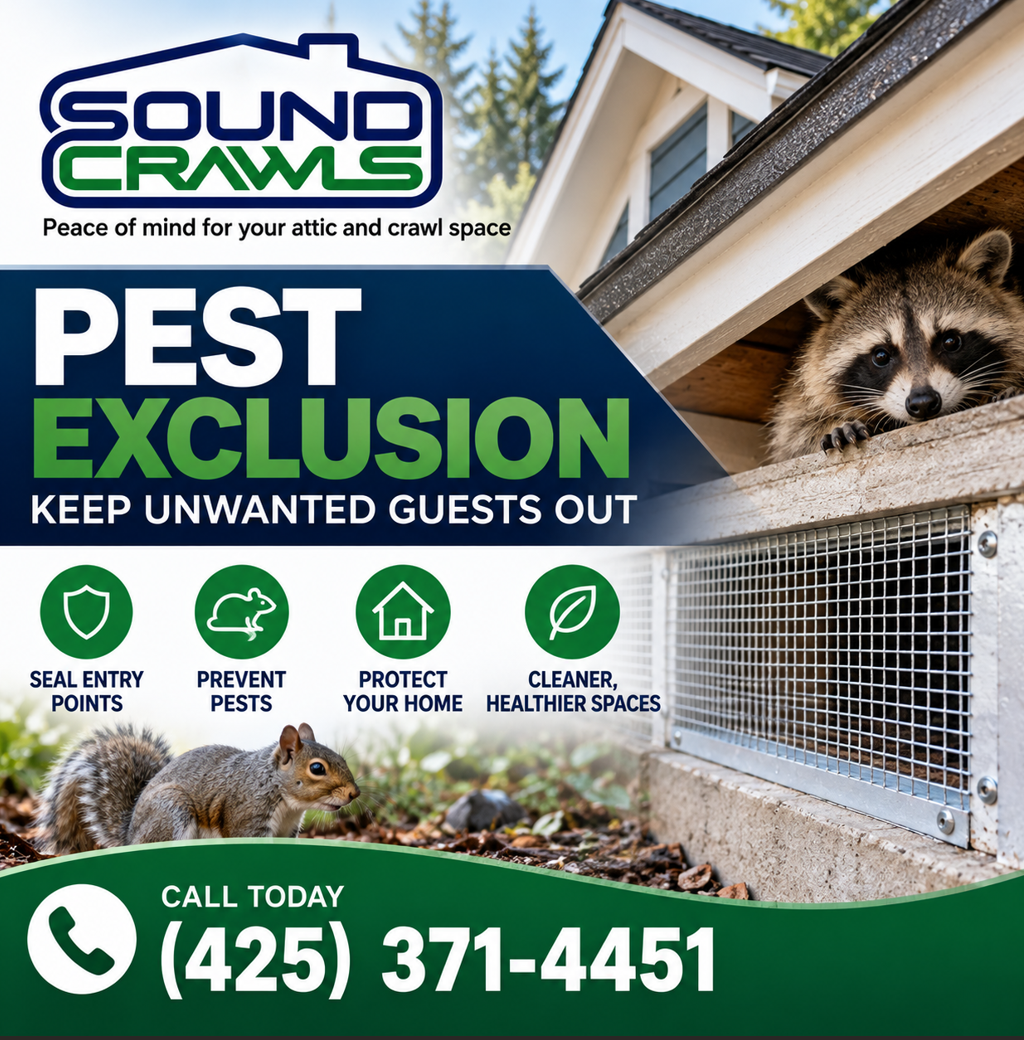
Discovering signs of rodents overhead can raise questions about how much damage has already occurred and what needs to happen next. Attic rodent damage can involve far more than a few droppings or disturbed insulation. Rodents can contaminate insulation, damage ductwork, chew wiring, create nesting areas, and repeatedly enter through small exterior openings. For homeowners in Mukilteo, resolving the problem properly means addressing both the damage inside the attic and the conditions allowing rodents to get there.
Simply removing rodents does not restore damaged materials or prevent another infestation. Professional attic restoration and rodent exclusion focus on cleaning up the consequences, identifying entry points, and making the attic less accessible in the future.
What Rodents Can Damage Inside an Attic
Attics provide many of the conditions rodents seek: shelter, warmth, nesting material, and protection from predators. Once inside, mice, rats, squirrels, or other pests can move through insulation and use hidden areas around framing, ducts, and stored belongings.
Insulation frequently shows some of the most extensive damage. Rodents may tunnel through it, compress it, tear it apart for nesting material, or contaminate it with urine and feces. Insulation that has been significantly disturbed may no longer provide consistent thermal coverage.
Rodents also gnaw because their teeth continually grow. Electrical wiring, flexible ductwork, wood, plastic, and other materials may become targets. Learning the signs of rodents in the attic can help homeowners recognize an infestation before damage becomes more widespread.
Signs That Attic Rodent Damage May Be Present
Scratching, scurrying, or chewing sounds are common clues, particularly at night. Homeowners may also notice odors, droppings, nesting material, or evidence of rodents elsewhere in the house.
Problems can also appear indirectly. A room that becomes harder to heat may have damaged or displaced attic insulation. Unusual odors coming through ceiling penetrations can indicate contamination overhead. Pest sightings around rooflines, gutters, vents, or exterior walls may point to potential attic access.
Some damage is difficult to identify without entering and inspecting the attic. Rodents can travel beneath insulation or into areas that are not visible from an attic opening. A professional assessment can determine how far activity has spread and whether insulation, ductwork, wiring, or other components require further evaluation.
Removing Rodents Is Only the First Step

Stopping active rodent activity is necessary, but it does not erase what happened while the animals were inside.
Droppings, urine, nesting debris, damaged insulation, and lingering odors may remain after rodents are gone. If these materials are left behind, the attic may still have sanitation and performance problems. Old nesting material and scent trails can also contribute to conditions that make the space attractive to future pests.
Professional attic cleanup and restoration addresses the condition of the attic after an infestation rather than treating rodent removal as the end of the project.
Depending on the extent of the damage, restoration may involve removing contaminated materials, cleaning affected areas, replacing insulation, and identifying building components that need repair by the appropriate professional.
When Does Attic Insulation Need to Be Replaced?
A small amount of localized activity does not automatically mean every inch of attic insulation must be removed. The decision depends on the extent of contamination, physical damage, moisture exposure, and how widely rodents traveled through the space.
Insulation replacement becomes more likely when contamination is widespread, nesting has significantly disturbed the material, insulation has been compressed or displaced, or odors remain embedded in affected areas.
Installing fresh insulation directly over heavily contaminated material is not a complete repair. It can conceal the damage without resolving it. When removal is warranted, professionals can clear compromised material and evaluate the exposed attic before installing replacement insulation.
This approach provides an opportunity to identify hidden evidence that would otherwise remain covered.
Why Entry-Point Identification Matters
Repairing the interior without addressing exterior access leaves the home vulnerable to another infestation.
Rodents can enter through surprisingly small gaps. Roof intersections, damaged vents, soffits, fascia, utility penetrations, siding transitions, and openings around pipes or cables may provide access. Trees and vegetation near the structure can also create routes toward the roofline.
Professional rodent exclusion services focus on locating and securing vulnerable openings rather than relying solely on trapping or removal. Exclusion is particularly important because rodents often return to locations where they previously found reliable shelter.
For Mukilteo homes, weather exposure can also contribute to changing exterior conditions. Building materials can deteriorate, gaps can develop, and damaged vent covers or exterior components may eventually provide new opportunities for pests.
Frequently Asked Questions
How can I tell if rodents have damaged my attic insulation?
Common signs include tunnels through insulation, compressed or displaced material, droppings, urine contamination, nesting debris, odors, and visible nesting areas. A professional inspection can determine how extensively the insulation has been affected.
Does all attic insulation need to be removed after a rodent infestation?
Not necessarily. The amount of insulation requiring removal depends on the extent of contamination and physical damage. Localized problems may require a different approach than widespread nesting and contamination.
Can new attic insulation be installed over rodent-damaged insulation?
Heavily contaminated or damaged insulation should be professionally evaluated before new material is installed. Covering compromised insulation can leave contamination and other underlying problems unresolved.
How can rodents be prevented from returning to an attic?
Professional rodent exclusion focuses on identifying and securing potential entry points around rooflines, vents, soffits, fascia, utility penetrations, and other vulnerable exterior areas.
Should chewed electrical wiring in an attic be inspected?
Yes. If rodent activity has damaged or potentially affected electrical wiring, a qualified electrical professional should evaluate the wiring and determine whether repairs are necessary.
Repair vs. Prevention: Why You Need Both
Repair and prevention solve different parts of the problem.
Attic restoration addresses what rodents have already damaged. This can include contaminated insulation, nesting debris, odors, and other affected materials. Prevention addresses how rodents entered and what can be done to reduce the chance of another infestation.
Completing only one side of the process can leave homeowners with an incomplete solution. Cleaning an attic without sealing access points may result in repeat contamination. Excluding rodents without addressing heavily damaged insulation can leave the attic in poor condition even after pest activity stops.
A coordinated approach helps protect the investment made in cleanup and repairs.
Preventing Repeat Attic Rodent Problems
Effective prevention begins with the building envelope. Openings should be identified and professionally sealed using materials appropriate for the location and type of entry point.
Vent covers, roofline transitions, soffits, fascia, and utility penetrations deserve careful attention. Homeowners who have experienced previous infestations may also benefit from periodic inspections, especially when exterior repairs, storms, roofing work, or other changes could create new gaps.
Rodent prevention should also be considered before installing new attic insulation. There is little value in paying for professional attic insulation replacement if animals still have an easy route back into the space.
Addressing access first helps protect replacement materials from the same contamination and physical damage that affected the original insulation.
Why Delaying Attic Repairs Can Become Expensive
Attic rodent problems rarely improve while activity continues. A limited infestation can expand as rodents reproduce, establish additional nesting areas, and travel farther through the attic.
Insulation damage can become more extensive. Contamination can spread. Ductwork or wiring may be affected. Additional entry points can develop as animals repeatedly use or enlarge vulnerable areas.
Delaying professional service may ultimately increase the amount of insulation or other material requiring removal. When wiring has been chewed, an electrician may also need to inspect affected areas. Damaged ductwork or structural components can require additional specialized repairs.
Early intervention gives homeowners a better chance of containing the scope of the damage before restoration becomes more involved.
What to Expect From a Professional Attic Assessment
A professional evaluation should look beyond visible droppings. The goal is to determine the extent of rodent activity, identify damaged materials, locate potential access points, and establish an appropriate sequence for cleanup and repairs.
That sequence matters. Active pest problems and entry points should be addressed so freshly restored areas are not immediately exposed again. Contaminated or damaged materials can then be removed as appropriate, followed by cleaning, repairs, and insulation replacement when necessary.
For Mukilteo homeowners, this provides a clearer picture of what actually needs attention rather than assuming every rodent problem requires the same solution.
Healthy homes start from the ground up, but protecting the entire building also means paying attention to what is happening overhead. Attic conditions can affect comfort, energy efficiency, indoor cleanliness, and the long-term condition of important building components.
If you have found droppings, damaged insulation, nesting material, or other signs of attic rodent damage in your Mukilteo home, professional evaluation can help determine what needs to be removed, repaired, and secured against future pests. Call Sound Crawls at (425) 371-4451 to schedule an inspection and address the damage before rodents have an opportunity to cause more problems.